Jari Vermeulen
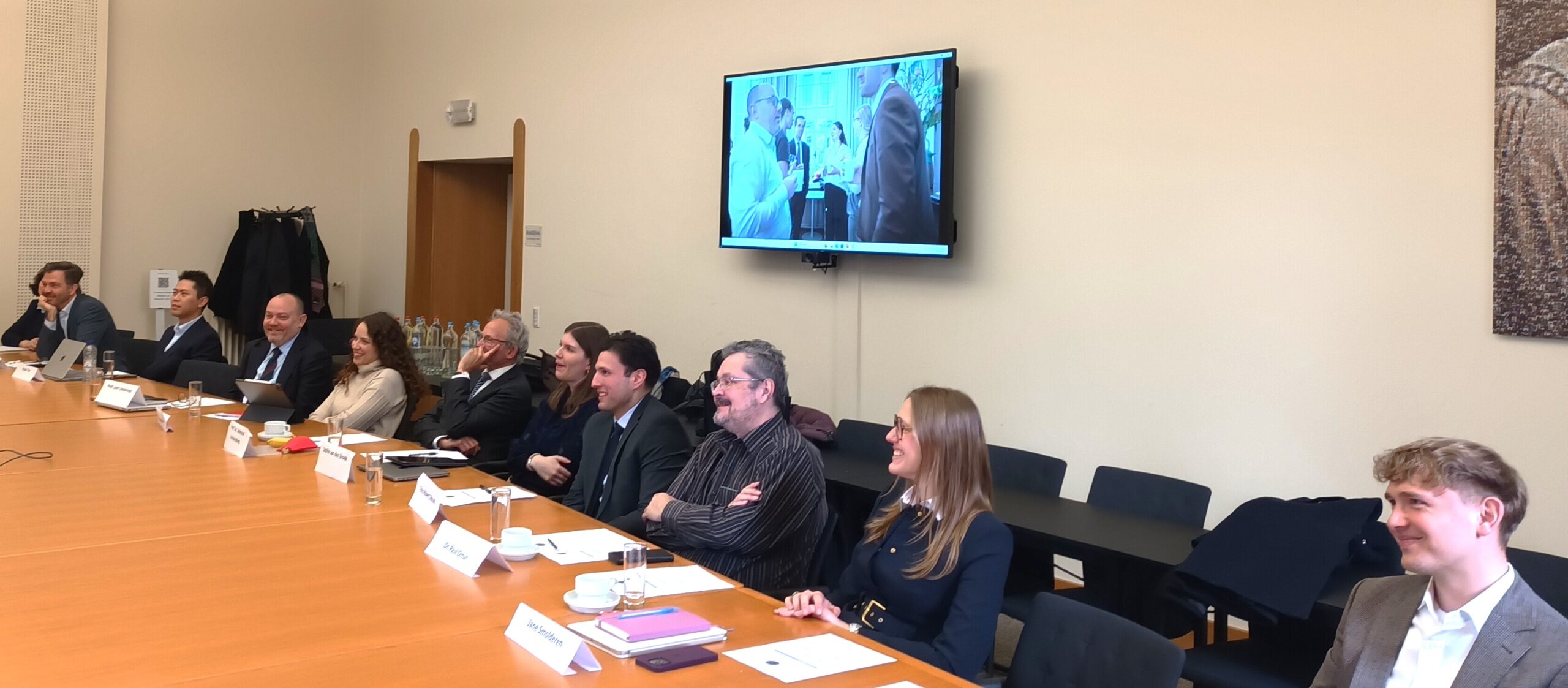
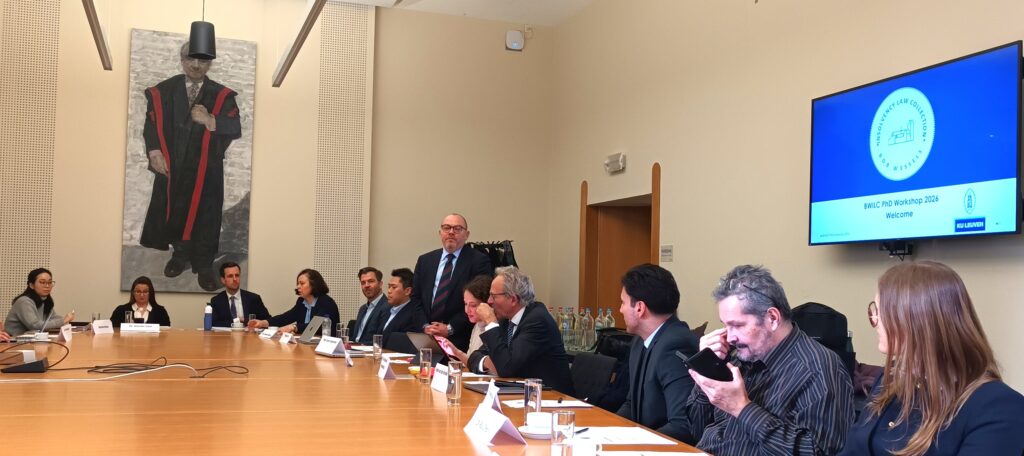
On March 25th and 26th of 2026, an international group of PhD researchers and seasoned academics gathered at KU Leuven to discuss research in the field of insolvency law. Young academics presented their research (project) in a friendly but critical setting. With eleven research and poster presentations and a guest lecture, the program was rich. Decompression was taken care of as well, with visits to Leuven’s restaurants and the university’s library. It proved again a successful recipe for discussing matters of restructuring and insolvency law, advancing academic ideas, while connecting with other scholars.
The BWILC PhD Workshop remains one of the rare spaces dedicated to fostering dialogue among early-career scholars in insolvency law. Neither insolvency law nor its practitioners operate in isolation. As the world is confronted with vulnerability as a feature, not a bug, of life, the theme of vulnerability surfaced repeatedly at the 2026 Workshop. During our visit to the twice-destroyed university library of Leuven, we were confronted with the vulnerability of peace and cultural heritage. Vulnerability in law was addressed, too, with discussions on vulnerability theory and the special situation of vulnerable actors in insolvency such as non-adjusting creditors and MSMEs.
Wednesday March 25th: Domus amica, domus optima!
A storm hit Leuven the night before the workshop began. The day, however, started calmly with lunch, welcoming speeches and an introduction of the participants. In this friendly and thus optimal environment, we were set for a day of presentations focused on restructuring law.
Fatiha Mekouar (Sidi Mohammed Ben Abdellah University, Morocco)demonstrated that insolvency law does not operate in a vacuum. She shed light on the (in)accessibility for small entrepreneurs of the reformed Morrocan restructuring law regime. She explained how the economic context, institutional deficiencies, and other non-legal conditions create serious obstacles for MSMEs seeking to benefit from a transplanted restructuring framework.
Joël Lozeman (Leiden University, the Netherlands)presented the storyline of his PhD thesis, critically analyzing options as the potential ‘Holy Grail’ to valuation discussions in restructurings. In the US, valuation disputes are sometimes solved by giving options to lower ranked parties. Joël discussed if options could be used under the Dutch restructuring act as well. He offered a critical perspective, showing how options can in fact result into new conflicts of interest.
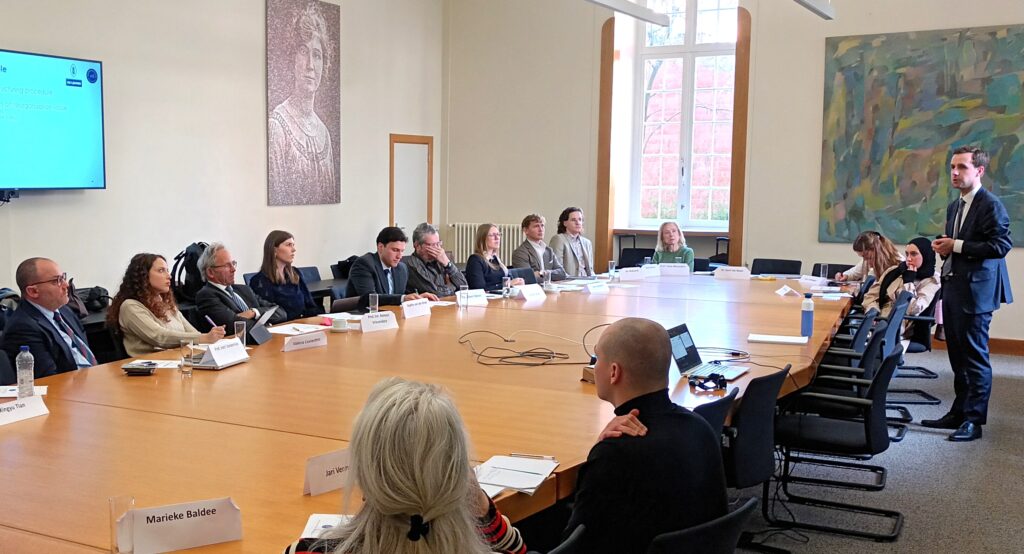
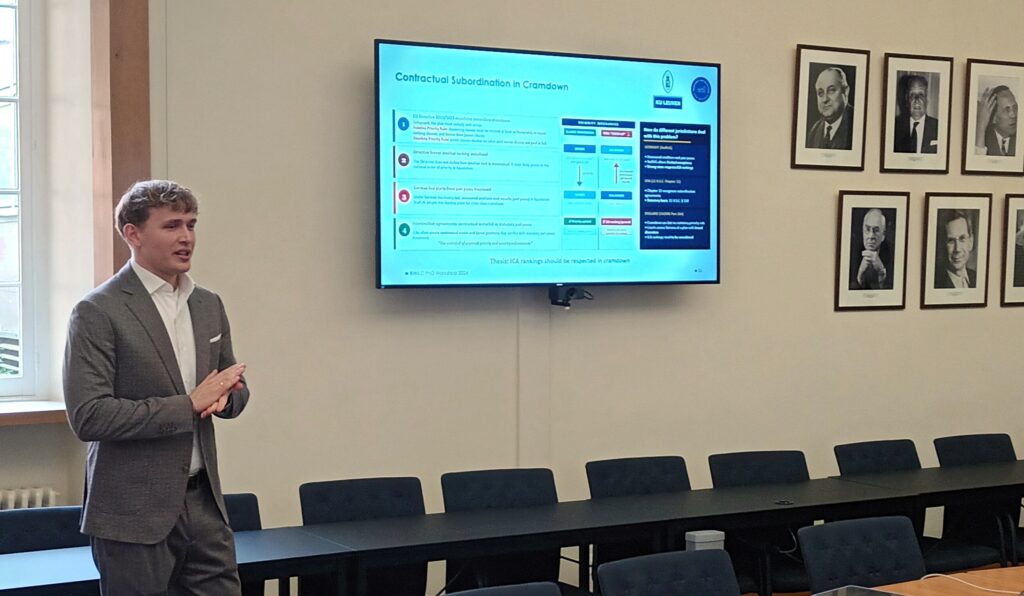
After a coffee-and-cake break, the first two five-minute ‘lightning’ poster presentations followed.
Jan Wojkowski (Martin-Luther University Halle-Wittenberg, Germany) analyzed problems with a non-harmonized issue in restructuring proceedings. In German restructuring proceedings, inter-creditor (subordination) agreements (‘ICA’s) are ‘ignored’ when creating creditor classes. This is mitigated through ‘turn-over’ obligations, but Jan showed how this can give rise to cram-up problems.
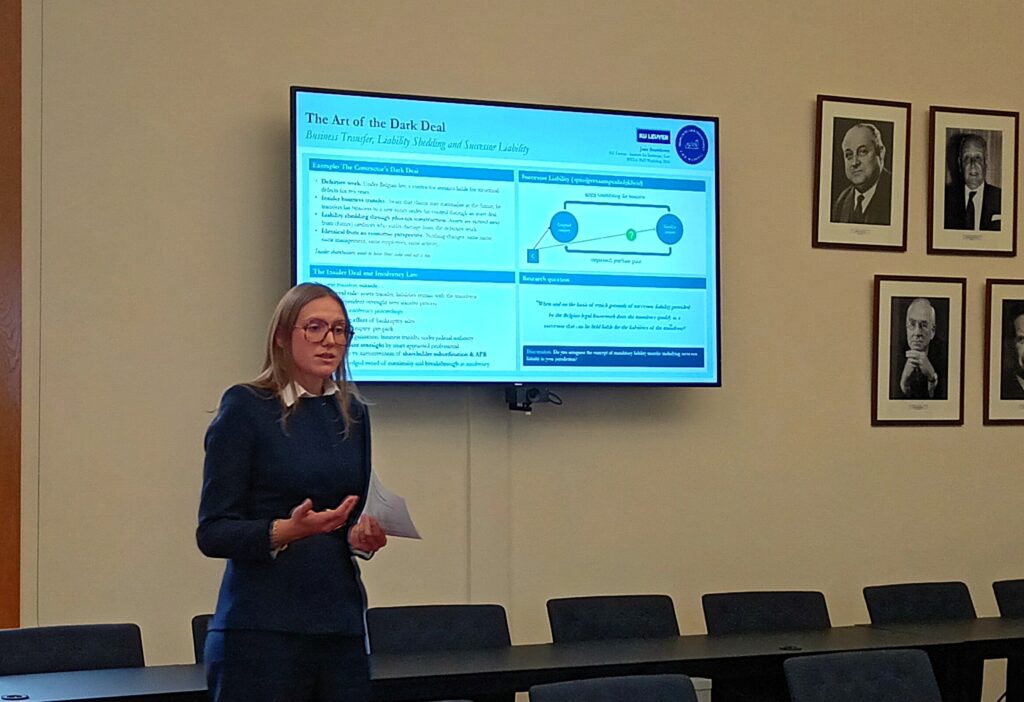
Jane Smolderen (KU Leuven, Belgium) discussed the liability-shedding effects of business transfers that are used as a restructuring tool. This raises questions about the possibility of successor liability. Whereas this is already well-known in the US, it is less so in Europe, but it is emerging as a potential remedy.
Pavel Kvashnin (Toulouse Capitole University, France)discussed the EU harmonization (de lege lata and ferenda) of transaction avoidance rules. He elaborated on the promise and peril of substantive harmonization rules on transaction avoidance in light of the new EU Insolvency Directive.
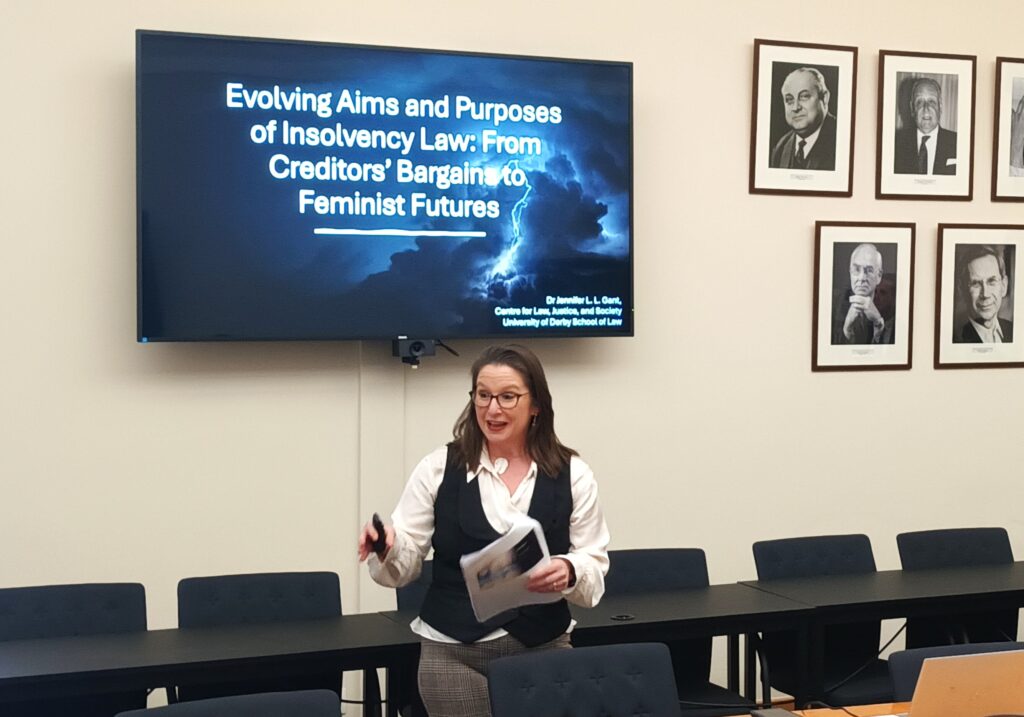
The first day ended with Dr. Jennifer Gant (University of Derby, UK) who delivered the BWILC lecture titled “From Liquidation to Rescue: Will Theory Ever Benefit From Sustainability?”. She explained how the Creditor Bargain Theory cracks at the recognition of non-adjusting creditors, finding potential remedies in stakeholder inclusivity and explored the need for a feminist lens for insolvency law theory.
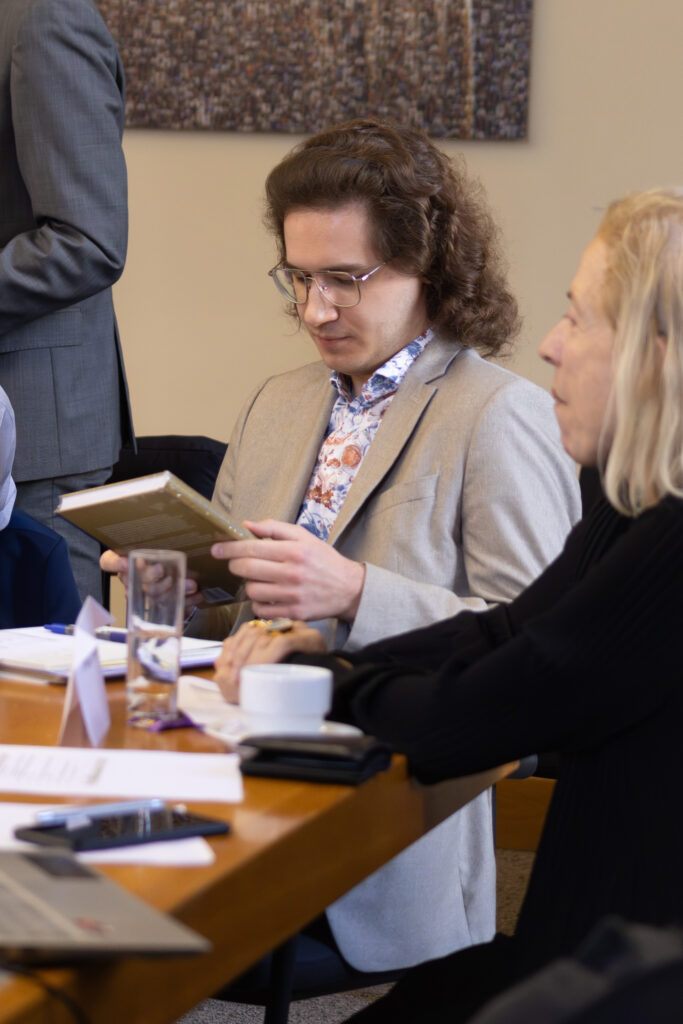
After the presentations, the group made a short walk through the city center of Leuven to visit the Leuven University Library, an impressive building with an equally impressive history. Just in time for the 6 PM carillon action, the group got a stunning view over Leuven after climbing the stairs inside the library’s tower – a tower modelled after the Giralda in Sevilla, in turn inspired by the Koutoubia Mosque in Marrakech. Dinner (buffet and dessert!) was served at the Domus.
Thursday March 26th: A good laugh and a long sleep are the two best cures
On Thursday, people woke up (more or less) fresh and ready for another day of presentations, discussions, and debate.
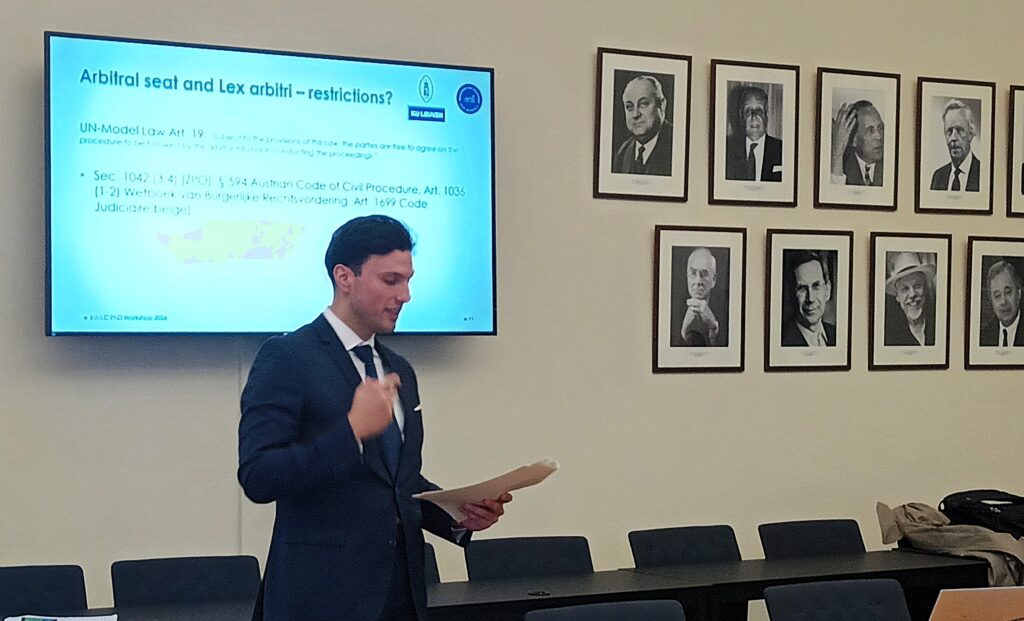
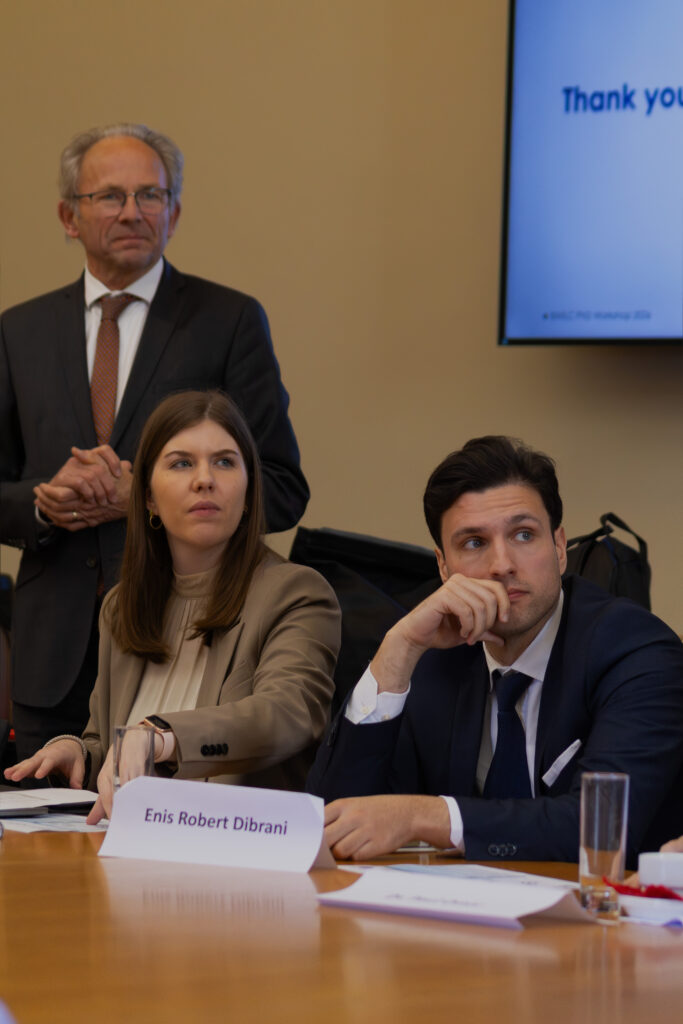
Enis Robert Dibrani (Leibniz University Hannover, Germany) woke up the group with an overview of the issues raised by Article 18 of the EIR 2015 on the effects of insolvency proceedings on pending arbitrations. This sparked a lively discussion on the ‘dominance’ of insolvency law principles over (global) arbitration proceedings.
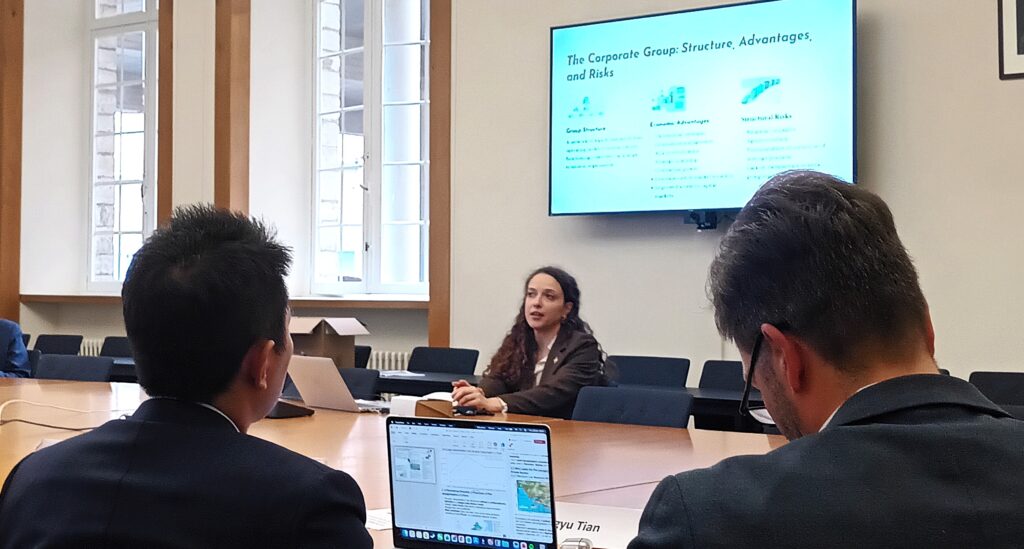
Valeria Costantino (ULB University, Belgium)focused on the corporate group as causing an apparent clash between the economic reality and legal treatment in restructuring and insolvency laws. She discussed the pros and cons of procedural, administrative, and substantive consolidation in corporate group insolvencies.
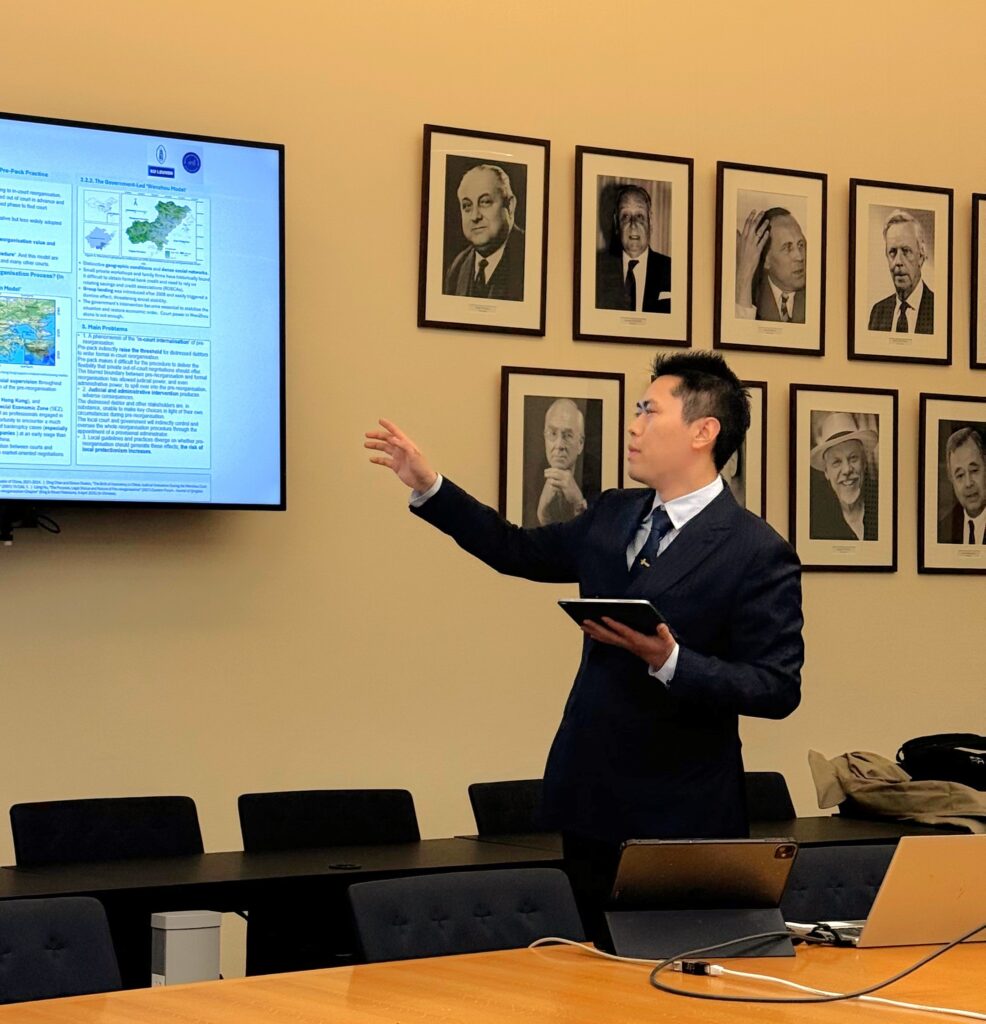
After another coffee break, Xingyu Tian (University of Leeds, UK)took us on a journey through the evolving restructuring landscape in China. He discussed the Chinese approach to pre-pack proceedings and highlighted the impact of the developing local customs on restructuring law in action.
Sophie van den Broek (Radboud University, the Netherlands) presented her project on the relationship between various kinds of third-party releases and Dutch insolvency law. She discussed the potential benefits and downsides of various kinds of third-party releases, as well as the reconcilability of such releases with current Dutch (pre-) restructuring law.
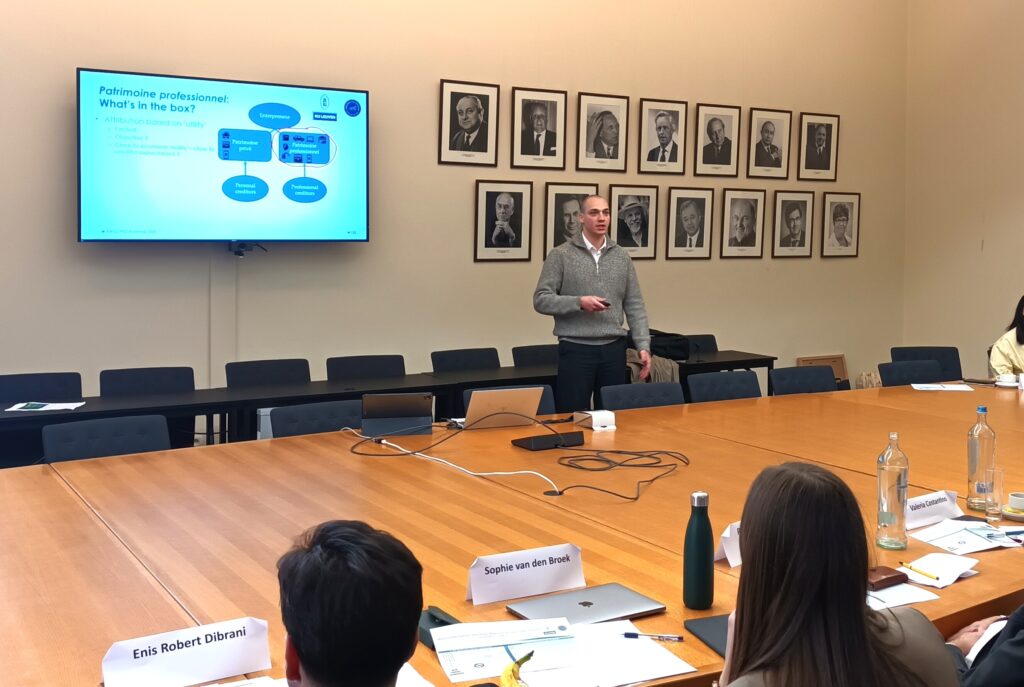
Jari Vermeulen (KU Leuven, Belgium) discussed France’s decision to grant 4 million entrepreneurs limited liability without requiring incorporation. While this has been described as a “revolution” in property law, it primarily raises normative questions about the desirability of asset shielding, regardless of the legal technique used. It also has disruptive effects on fundamental concepts in the law of securities and insolvency law.
The last presentation was delivered by Diana Kull (Christian-Albrechts-University of Kiel, Germany). She sketched a picture of the various digitalization efforts in the field of EU insolvency law. She showed how some countries are miles ahead of others in their digitalization efforts and discussed potential ways to bridge those gaps.
Prizes
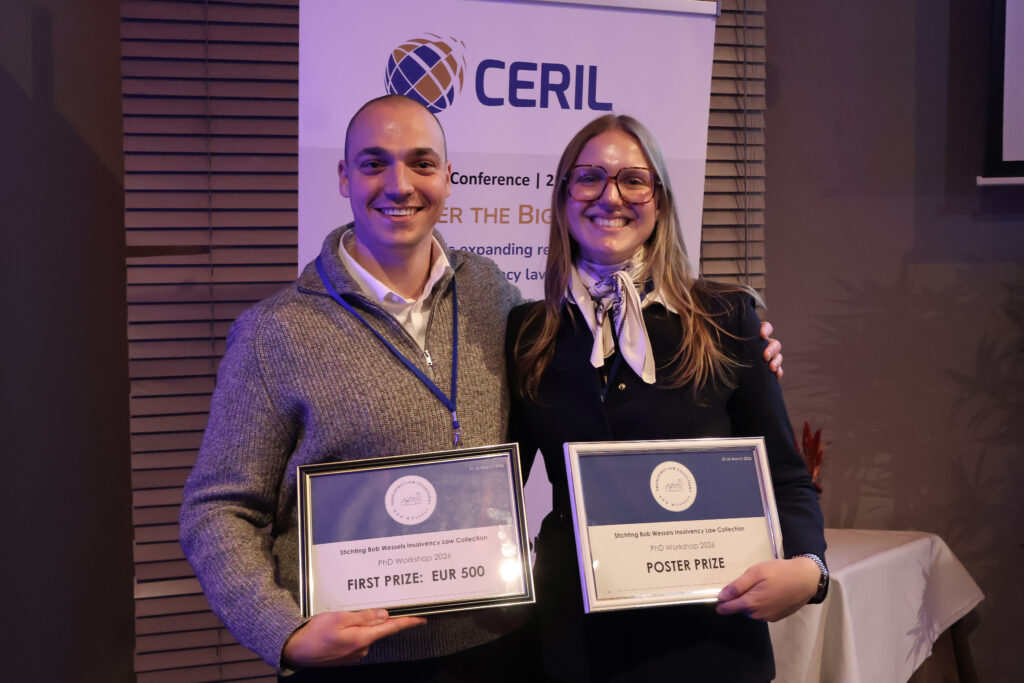
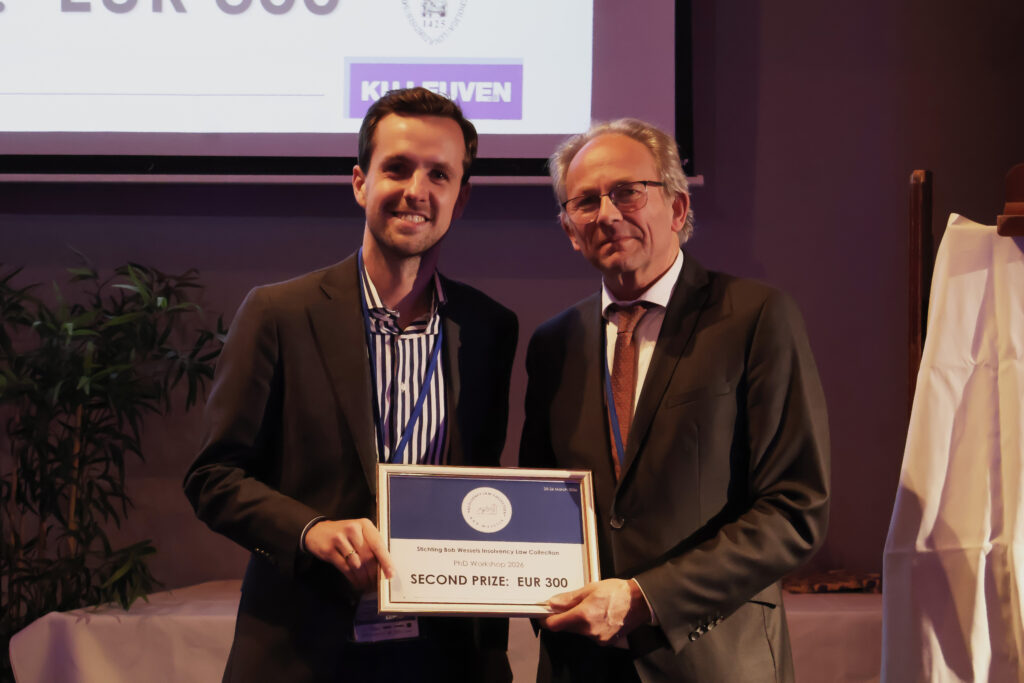
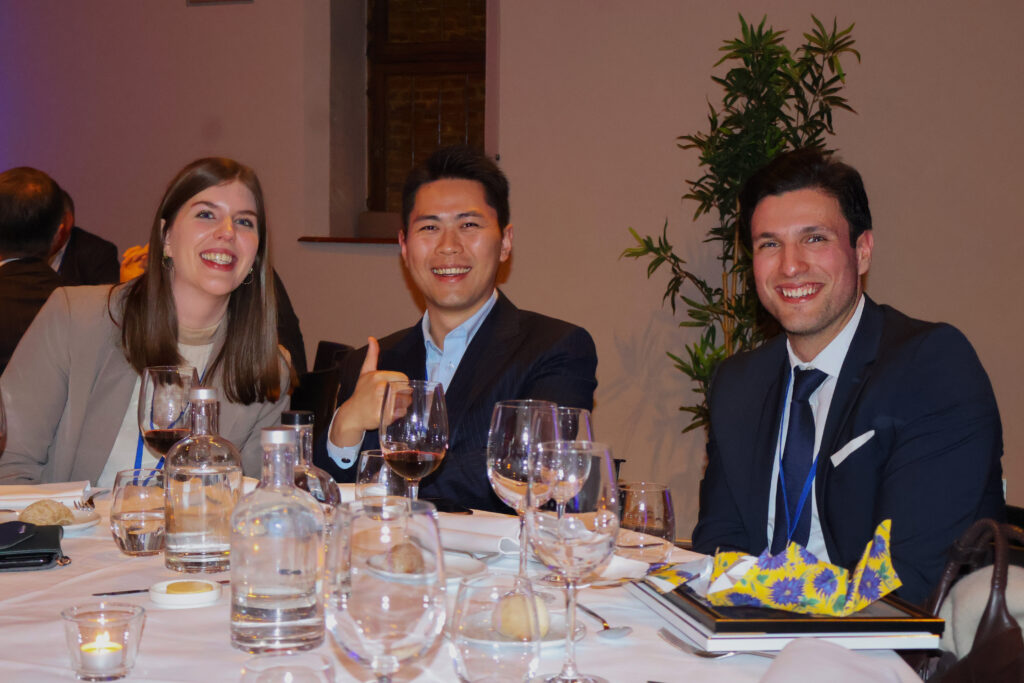
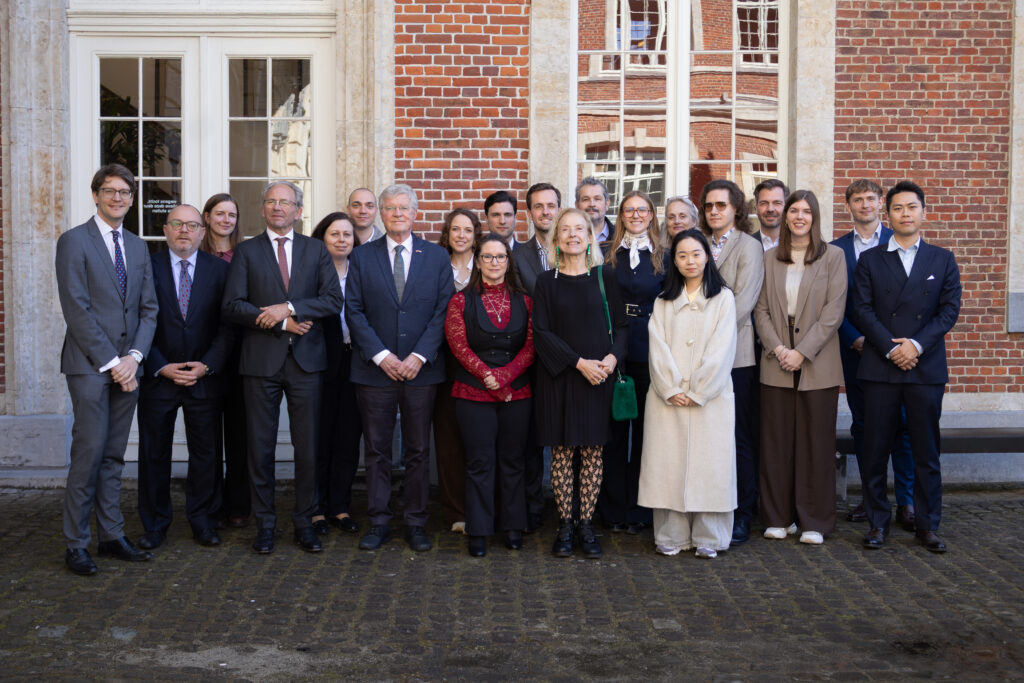
The group searched the sun for group photo (see above!) and headed to the Irish College for lunch and the start of the 2026 CERIL Conference. As in previous editions, the workshop also included a prize competition, with awards for the most convincing research presentations and the best poster presentation. During the CERIL dinner at the Leuven Faculty Club, Professor Reinout Vriesendorp awarded the prizes:
First prize: Jari Vermeulen
Second prize: Joël Lozeman
Third prize: Valeria Constantino
Best poster prize: Jane Smolderen
It was important that good research discussion could take place during the two workshop days, this time hosted by the KU Leuven. It was therefore great to hear that the next edition of the in-person BWILC PhD Workshop will take place in spring 2027 in Rome (Italy).