
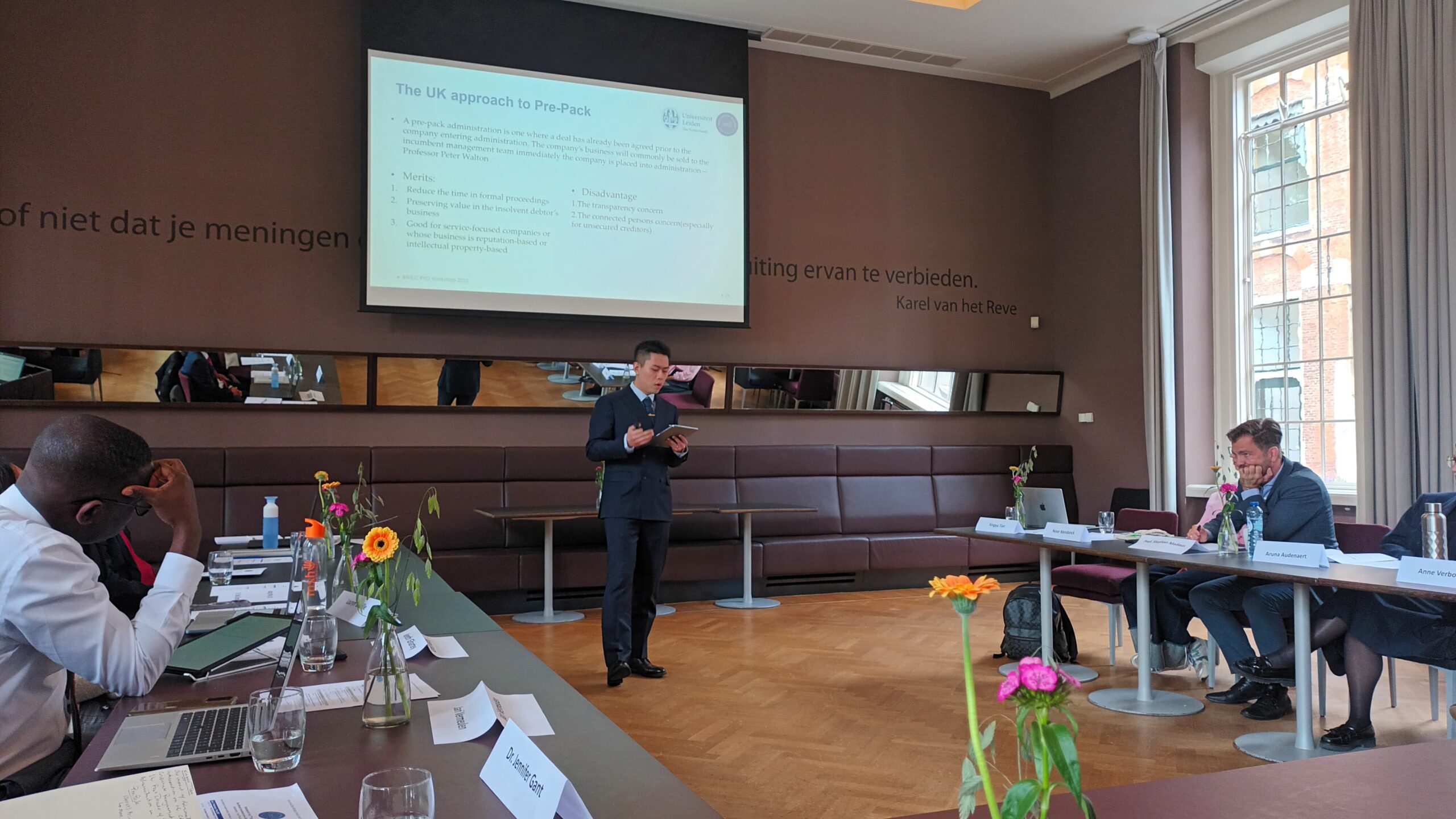
In recent years, China’s approach to corporate insolvency and restructuring has undergone a remarkable evolution. Among the latest innovations is the introduction of the “pre-reorganisation” system, commonly known as the pre-pack, which is designed to streamline bankruptcy procedures and enhance the efficiency of corporate rescue. This mechanism draws on the pre-packaged reorganisation practice developed under Chapter 11 of the U.S. Bankruptcy Code, where the debtor negotiates and solicits creditor votes on a reorganisation plan before filing a bankruptcy petition with the court. These trials mark a significant step toward modernising China’s insolvency framework and balancing creditor protection with the preservation of distressed but viable businesses.
Background: The rise of pre-packaged reorganisation in China
The concept of pre-packaged reorganisation is relatively new in China’s legal landscape. Before its introduction, corporate rescue primarily relied on the formal bankruptcy reorganisation procedure under the Enterprise Bankruptcy.
Beginning in 2015, the Chinese central government launched a comprehensive “supply-side structural reform” agenda to facilitate economic transformation. A core element of this agenda has been the systematic elimination of “zombie enterprises”, companies that persist despite long-term insolvency and operational inefficiency, thereby tying up resources and crowding out more dynamic sectors.
The existing legal framework for reorganisation, however, proved insufficient to accommodate this need at scale. In response, from 2018 onwards, both the National Development and Reform Commission and the Supreme People’s Court issued policy documents encouraging local courts to explore pre-reorganisation mechanisms. This initiative was intended to enhance the flexibility and effectiveness of China’s insolvency system by enabling earlier intervention and preserving enterprise value before formal insolvency proceedings are triggered.
Basic structure and process of the pre-pack in China
The Chinese pre-pack model combines negotiated restructuring with judicial oversight and typically unfolds in three main stages: pre-negotiation, court acceptance and plan approval.
Once the debtor or a creditor files an application, the court’s role becomes predominantly supervisory rather than investigative. If the pre-reorganisation plan meets the applicable statutory requirements, the court may accept the case, confirm the classification of creditor groups and convene a short meeting to verify voting results. The final step is the formal approval and implementation of the reorganisation plan. If the court determines that the plan is lawful, fair and supported by the required majority of creditors, it confirms the plan and terminates the case upon successful execution. This streamlined process can significantly shorten the duration of reorganisation compared with conventional bankruptcy proceedings.
Key features and innovations
China’s pre-pack trials exhibit several distinctive features when compared both with Western pre-pack models and with traditional domestic bankruptcy practices.
One important feature is that the system is court-guided yet negotiation-oriented. Unlike the largely market-driven use of pre-packs in some jurisdictions, such as the United Kingdom, the Chinese pre-pack remains firmly under judicial supervision. Courts play a central role in ensuring compliance with public policy and fairness among creditor classes, while extensive pre-filing negotiations aim to enhance procedural efficiency. This hybrid structure reflects China’s gradualist approach to legal reform, balancing state oversight with market flexibility.
Another notable feature is the debtor-in-possession model, under which the company’s management generally continues to operate the business during reorganisation. This autonomy is constrained by close court monitoring and, in some regions, by the appointment of a provisional administrator. Using guidance issued by the Shenzhen courts as an illustrative example, the provisional administrator may organise negotiations between the debtor, its creditors and other stakeholders, participate in drafting the pre-reorganisation plan, coordinate vote collection and submit a pre-reorganisation work report to the court. This structure is intended to preserve business stability while ensuring accountability and professional oversight.
A further characteristic is the strong emphasis on consensus and early settlement. Chinese pre-packs encourage intensive early communication among debtors, creditors and, frequently, local governments. In many pilot cases, local courts and provisional administrators act as mediators during the pre-negotiation stage, helping to resolve disputes and build consensus before a formal filing is made. This approach aligns with China’s broader preference for resolving disputes through coordination and mediation rather than adversarial litigation.
Conclusion and Outlook
China’s exploration of the pre-pack mechanism closely follows central government policy directives and seeks to remedy procedural inefficiencies within the existing reorganisation framework. Although pre-pack procedures have not yet been formally incorporated into national bankruptcy legislation, local courts across the country have actively experimented with a range of implementation models. Many of these trials have produced positive outcomes, demonstrating the potential of pre-packaged restructuring to increase efficiency and preserve enterprise value.
China continues to refine and expand its use of pre-pack practices, informed by local experimentation and accumulating case experience. Ongoing research will track these developments and analyse how pre-pack mechanisms evolve within China’s legal and economic context, including their long-term impact on creditor protection, business rescue and the broader policy goals of economic restructuring and social stability.


*This research blog was written by: Xingyu Tian, PhD candidate of University of Leeds.
About BWILC and the PhD Workshop
This research was presented and discussed at the last PhD Workshop on European and International Insolvency law, organised by the Stichting Bob Wessels Insolvency Law Collection (BWILC). Since 2018, BWILC maintains the private insolvency law book collections of Prof. em. Bob Wessels, extended with the collections of the late Prof. Ian Fletcher and the late Gabriel Moss QC, in addition to books that have been kindly donated by scholars and practitioners from around the world. To browse or visit this unique collection, click here.
Since 2019, BWILC organises an annual PhD Workshop for PhD students from Europe and beyond. At this workshop, PhD candidates can present their ideas, but also the challenges and questions they are confronted with in a two-day workshop attended by their peers and senior academics. At the end of the workshop, organised alternately in Leiden and another city, prizes are awarded for the best presentations.